
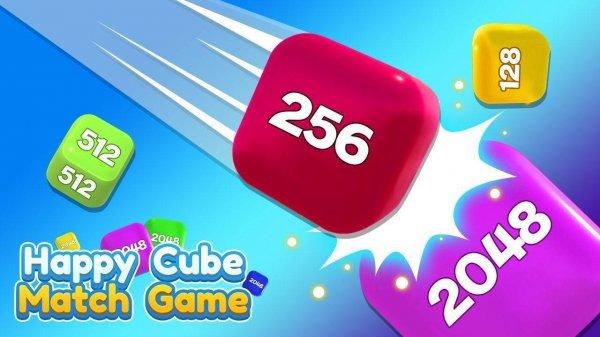
Spatial Number Stack 3D
Reviews
Spatial Number Stack 3D takes the familiar number-merging concept and adds a welcome layer of complexity with its three-dimensional grid. The game is easy to pick up but offers substantial depth for those who enjoy planning ahead. The clean visuals and responsive controls make for a smooth experience. The challenge escalates naturally, keeping the game engaging without becoming frustrating. It is a solid choice for puzzle enthusiasts looking for a fresh take on the genre.
About this game
Core Mechanics
Spatial Number Stack 3D builds on the familiar concept of merging numbers by adding a third dimension. Cubes with numbers are placed on a 3D grid. When two cubes with the same number are moved to touch each other, they combine into a single cube with a value that is the sum of the two. The primary objective is to create a cube with the number 2048. The 3D layout introduces extra complexity because you must consider depth along with the usual horizontal and vertical planes.
Strategic Planning
Success in this puzzle depends on careful planning. Players need to think several moves ahead to set up chains of merges. Keeping similar numbers grouped together helps create opportunities for multiple merges in one turn. The grid can fill up quickly, so every move should be made with the goal of freeing space. Moves that do not result in a merge cause the cubes to bounce back, which serves as immediate feedback and prevents accidental placements.
Visual and Interactive Design
The game uses bright, clear colors to distinguish different cube values, making it easy to scan the board at a glance. The 3D perspective gives a sense of depth, and the cubes have a satisfying bounce animation when they do not merge. Controls are simple: players drag cubes with a mouse or touch input. This straightforward interaction allows anyone to start playing without a steep learning curve.
Progression and Challenge
As players reach higher cube values, the game becomes more demanding. The grid offers less room for error, and the need for precise planning increases. There are no time limits, so players can take as long as they need to consider their options. This makes the game suitable for both quick sessions and longer, more thoughtful play. The challenge lies in balancing the desire to create high-value cubes with the need to keep the board from becoming too crowded.







Comments
Sign in to leave a review
No account? Create one
No comments yet.